Puzzle Breakers: Champions War
- 3.9
- Rating
- 1.00M
- Installs
- Free
- Price

 Analysis by App-foxy
What makes Puzzle Breakers: Champions War worth a closer look is the way it asks me to think about a fight before I start tapping through it. This is a free role-playing game from RJ Games, but its central appeal is not simply collecting fantasy characters or watching battles unfold. The important capability is the combination of puzzle decisions and team strategy: the board gives me an immediate problem, while my hero choices determine whether that problem becomes an easy victory or a slow defeat.
That combination gives the game a different rhythm from a traditional match-three title. I am not only looking for a quick chain of tiles. I am also considering which enemy should be pressured, which attack should be saved, and whether a promising move will actually help the team I brought into battle. The result is a game that can feel casual for a few minutes, yet still rewards players who pay attention to the relationship between the puzzle board and their fantasy squad.
The game is listed as a role-playing title and carries an Everyone 10+ content rating. It is free to start, with optional purchases ranging from $0.99 to $99.99 per item. That pricing model matters because the early experience is easy to approach, while long-term progress can tempt players to spend when they want faster access to stronger resources. I found the most satisfying way to play was to treat spending as optional rather than necessary, and to focus on learning how my decisions affected each battle.
You May Also Like

 Blood Strike: 2.5 Anniversary
Blood Strike’s Loadouts Turn Every Drop Into a Tactical Gamble
A close look at Blood Strike’s custom loadouts: how fast access to signature weapons reshapes its battle royale rhythm, rewards preparation, and narrows the gap between fights.

 Pandora - Music & Podcasts
Pandora’s Music Is Easy to Start, but Harder to Recover
Pandora’s strength is its low-effort path from a seed to a station. Its weak spot is how much confidence it asks you to place in connection, setup, and quiet recovery.

 8 Ball Pool
 Is Built on Rivalries, Rematches, and Routine
A close look at the rivalries, rematches, shared routines, and unanswered safety questions that turn a quick pool match into a persistent mobile community.

 Samsung Music
’s Quiet Strength Is Playing What You Already Own
Its reach comes less from spectacle than from dependable access to a personal library. That simplicity is both the app’s strongest retention engine and its ceiling.

 AccuWeather: Weather Radar
AccuWeather Review: A Quick, Clear Forecast for Everyday Decisions
For everyday plans, the best forecast is the one you can understand quickly. AccuWeather makes rain timing, radar, and local conditions easy to act on, with a few trade-offs.

 Hill Climb Racing
Why Hill Climb Racing Still Turns Crashes Into One More Run
A tiny car, a bumpy hill and one more upgrade: Hill Climb Racing keeps resurfacing because its simple chaos makes every near-miss feel personal.
More From Our News Desk



Why the puzzle-and-hero combination matters
I find the puzzle-and-hero pairing meaningful because it gives each turn two jobs: solve the board in front of me and support the team I chose. That connection makes it worth paying attention to how a move shapes the fight, rather than judging it only by the match it creates. The next section looks at how that extra layer changes the way I approach individual battles.
A board move is also a battle decision
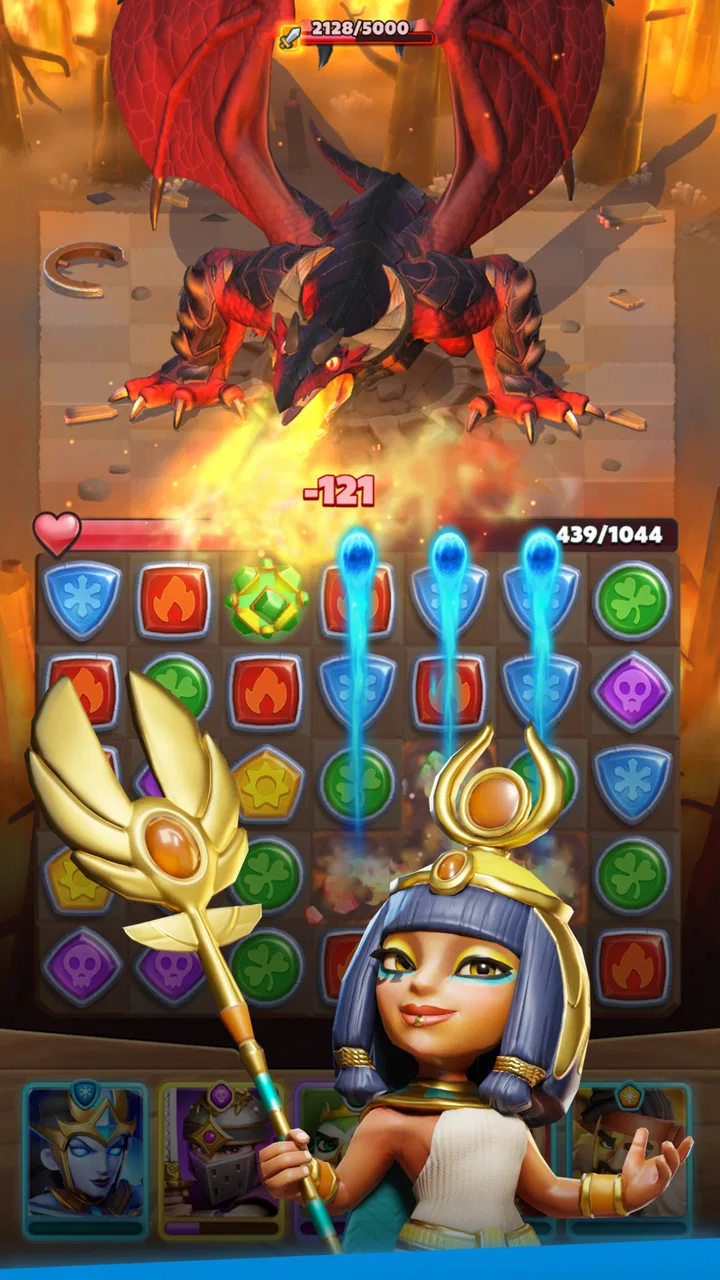
In many puzzle games, a good move is simply the one that creates the largest match or clears the most space. Here, I have to look beyond the immediate visual reward. The colors and attacks on the board connect to the heroes I use, so a move can be valuable because it charges the right character, damages a particular target, or prepares the next turn. That extra layer is the capability that gives Champions War its identity.
I quickly learned that the most attractive move is not always the best one. A large match can look impressive, but if it sends damage toward an unimportant enemy while a dangerous opponent remains active, the result may be disappointing. A smaller move that improves the position of the team can be more useful. This makes the puzzle section feel less like a separate mini-game and more like the control panel for the role-playing battle.
The key habit is to read the battle first and the board second. Before moving anything, I check which enemy is closest to becoming a problem, which hero is ready to act, and whether the next turn is likely to expose my team. That short pause prevents many careless moves. It also makes the game more interesting because I am constantly choosing between immediate damage and preparation.
Heroes change the value of the same move
The same board pattern can have a different value depending on the team I bring. A color match that seems ordinary with one group may become important when it supports a hero I rely on. This encourages experimentation instead of locking me into one favorite lineup. I found that changing the team can make familiar stages feel different, even when the underlying puzzle action remains recognizable.
This is where the role-playing structure earns its place. The heroes are not just pictures attached to a menu. They influence how I interpret the board and how aggressively I can play. A team built for quick pressure invites a different approach from one that needs more time to build momentum. I do not need to memorize every possibility to enjoy the game, but I do need to notice which characters benefit from the moves I naturally make.
For new players, this can create a small learning curve. At first, it is tempting to select the characters with the highest apparent strength and ignore the way they work together. That approach may carry me through simpler encounters, but it becomes less reliable when a stage demands better timing. I recommend testing a few combinations early instead of treating the first comfortable team as a permanent answer.
Strategy appears in small choices
The strategy is not limited to choosing a team before a fight. It also appears in the order of decisions during the encounter. I may have a useful attack available, but using it immediately could waste its effect if the target is already nearly defeated. On another turn, saving that ability may be risky because the enemy could act first. These are modest decisions, yet they give the battles a sense of involvement that automatic combat often lacks.
This is also why the game works well in short sessions. I can play one encounter while waiting for an appointment, but the puzzle layer gives me something to think about beyond simply pressing a victory button. If I have more time, I can replay my approach mentally and consider whether a different opening move would have preserved more health or built power sooner.
How I approach a new stage
My most reliable routine is simple. I begin by checking the opposing group, then I look for matches that can affect the most urgent target. After that, I avoid spending every useful option at once unless the battle clearly calls for a fast finish. Keeping one strong response available gives me room to recover when the board produces an awkward sequence.
Another useful habit is watching what happens after each move instead of planning too far ahead. Falling tiles can change the board, and an imagined follow-up is not always available. I try to plan one move ahead, but I stay ready to adapt. This is more effective than forcing a preferred pattern and hoping the next turn behaves exactly as expected.
When a fight goes badly, I do not immediately assume that the team is too weak. Sometimes the problem is the opening decision. I may have attacked the wrong enemy, ignored a useful color, or used an ability before it had the best target. Separating a tactical mistake from a progression problem helps me decide whether to replay, adjust the team, or improve the heroes.
The best everyday scenario
The game fits particularly well into a fragmented day. Imagine having ten minutes during a commute break or while waiting for someone. A full-scale role-playing game may ask for too much attention, while a basic puzzle may feel repetitive after a few rounds. Champions War sits between those two options. I can enter a battle quickly, make meaningful choices, and stop after a short session without needing to remember a complicated story state.
That convenience does not mean every session feels equally relaxed. A difficult encounter can demand concentration, especially when a careless board move creates a chain of problems. I like that tension in moderation, but I would not describe the game as pure background entertainment. If I am distracted, I make worse decisions, and the role-playing layer makes those mistakes more noticeable than in a simple tile-matching game.
It is also a reasonable choice for someone who enjoys fantasy character collecting but wants more control than an entirely automatic battle system provides. The puzzle board gives me a direct way to influence the fight. By contrast, a conventional idle role-playing game may be better for a player who wants progress with minimal input. A dedicated match-three game may be better for someone who cares only about fast puzzles and does not want team-building choices interrupting the flow.
Where the free model creates friction
The free entry point is helpful, but the optional purchase range means the game is built around a progression model that can appeal to impatient players. I prefer to decide in advance whether I am playing without spending or allowing myself a fixed budget. That boundary keeps a difficult stage from turning into an impulse purchase decision.
Purchases can be convenient for players who want to move faster, but speed is not the same as understanding. A stronger roster may solve an encounter that my decisions would otherwise need to solve, yet it can also reduce the satisfaction of learning the puzzle-and-team relationship. For me, the better long-term experience comes from treating upgrades as support for good play rather than a replacement for it.
Another trade-off is that the game can feel more demanding than its simple tile controls suggest. Someone may download it expecting a completely effortless puzzle, then discover that target selection and hero timing matter. That is not a flaw for me, but it is a mismatch worth knowing before installing. The game is most enjoyable when I want a light strategy layer, not when I want to tap without thinking.
Progression requires patience
Role-playing games naturally encourage me to improve characters and revisit decisions, but that structure can make progress feel uneven. A team may perform comfortably in one encounter and struggle in another because the enemy arrangement exposes a weakness in my usual approach. I have to accept that improvement is sometimes gradual rather than immediate.
When I hit a wall, I use the setback as a diagnostic. First I reconsider the board choices. Then I look at whether the team has a sensible balance for the encounter. Only after those checks do I think about upgrading. This order matters because spending resources on a poorly coordinated lineup can produce a stronger version of the same problem.
The game also asks for some tolerance of repetition. Replaying familiar battles can be useful for learning and progression, but players who need every session to introduce a completely new mechanic may lose interest. I enjoy repetition when it lets me test a better opening or a different hero combination. If that kind of refinement sounds tedious, a more linear action game may be a better fit.
Who will get the most from it
I would recommend Champions War to players who like fantasy teams, puzzle boards, and decisions that matter without requiring a long uninterrupted session. It is especially suitable for someone who enjoys asking, “What should I do with this turn?” rather than merely searching for the biggest visual match. The game gives enough control to make victories feel earned, while keeping the basic interaction approachable.
It is also a good match for players who enjoy experimenting. Instead of assuming that one lineup is always correct, I can change the way I approach a stage by adjusting the heroes and then reading the board differently. That experimentation is one of the less obvious strengths of the game. It turns a familiar puzzle format into a testing ground for team choices and timing.
I would be more cautious recommending it to someone who dislikes optional purchases in free games, even if that player never spends. The presence of purchasable items can affect how progression feels, particularly for anyone who compares their pace with players willing to pay. I would also steer away players who want a pure puzzle experience, a fully automatic role-playing game, or a story-first adventure with little tactical repetition.
Device expectations and the current edition
The Android release supports devices running Android 7.0 or later. The current version is 27.21.0, so players installing it today should expect the maintained version rather than an early launch build. It reached release on March 24, 2022, and its continued presence is reflected in a community of more than a million installs.
The public response is reasonably positive but not flawless, with an average rating of 3.9 from roughly fifty-six thousand ratings and about one thousand six hundred written reviews. I read that as a useful signal rather than a guarantee: many players find the blend appealing, while the progression and free-to-play structure will not suit everyone equally.
The Everyone 10+ rating makes it approachable for a broad audience, though parents should still remember that the game includes optional purchases. I would set expectations before handing it to a younger player, especially if the device allows purchases without a separate approval step. The game itself is easy to understand, but the spending model deserves the same attention as the combat mechanics.
My recommendation after playing
What stays with me is not the idea of matching tiles by itself. It is the way a small board decision can change the role-playing battle around it. The game gives me a reason to inspect the enemy group, value preparation, and reconsider a team that looked strong on paper. That makes the central capability practical rather than decorative.
My advice is to begin slowly, resist the urge to spend just because a stage feels difficult, and use early battles to learn how the heroes respond to different moves. If progress becomes frustrating, change the decision process before reaching for a purchase. That approach reveals whether the game’s strategic puzzle layer is genuinely right for you.
For me, Puzzle Breakers: Champions War works best as a compact fantasy strategy game with puzzle controls, not as a pure match-three diversion and not as a hands-off role-playing experience. Its strongest moments come when the board, the team, and the timing all line up. If you enjoy making meaningful choices in short battles and are comfortable with a free game that offers optional purchases, it is worth trying; if you want either total simplicity or uninterrupted progression, I would choose a different genre instead.
FAQs for Puzzle Breakers: Champions War
01What is Puzzle Breakers: Champions War?
Puzzle Breakers: Champions War is a mobile role-playing game that combines match-3 puzzle battles with hero collection and strategic team building. Players match colored pieces to attack enemies, charge special abilities, and progress through a campaign filled with battles and rewards. The game also includes character upgrades, equipment, and competitive or cooperative features that add more depth beyond the basic puzzle mechanics.
02How does the combat system work in Puzzle Breakers: Champions War?
Battles are based on matching three or more pieces of the same color. Successful matches generally damage opponents associated with that color and help charge your heroes’ special skills. Choosing where to make a match is important, because larger combinations can create stronger effects and may produce chain reactions. Winning consistently requires more than quick moves; you must also manage your team’s abilities, health, and elemental advantages.
03Is Puzzle Breakers: Champions War free to download and play?
Puzzle Breakers: Champions War can generally be downloaded and started for free, but it may include optional in-app purchases. These purchases can provide resources, summons, energy, upgrade materials, or other time-saving items. It is possible to make progress without spending money, although free players may need more patience when waiting for energy, collecting powerful heroes, or competing with users who invest in premium content.
04Does the game require an internet connection?
An internet connection is normally required for the main Puzzle Breakers: Champions War experience. Online access allows the game to synchronize progress, deliver events, process rewards, and connect players with competitive or social features. Because of this, the game may not be suitable for uninterrupted offline play. Availability of specific modes can vary, so players should not assume that every part of the application works without Wi-Fi or mobile data.
05Is Puzzle Breakers: Champions War suitable for new players?
The game is accessible to beginners because its basic match-3 controls are easy to understand, and early stages introduce the main systems gradually. However, the number of heroes, upgrade options, team combinations, and resource types can become more complicated over time. New players should avoid spending valuable materials too quickly, focus on developing a balanced team, and read skill descriptions carefully before committing to long-term upgrades or purchases.
Pros
- Combines match-3 puzzles with accessible RPG progression.
- Hero collection gives teams plenty of experimentation options.
- Short battles work well for quick mobile gaming sessions.
- Regular events can provide extra goals beyond the main campaign.
- Colorful fantasy visuals make the board and characters easy to follow.
Cons
- Energy limits may interrupt longer play sessions.
- Progress can become dependent on upgrading specific heroes.
- Random tile layouts sometimes make victories feel luck-based.
- New players face several systems and menus to learn at once.
- Competitive modes may favor users who spend on premium resources.

Puzzle Breakers: Champions War
Gallery